There’s a moment that happens with almost every plantation project, whether it’s a small home garden or a hundred-acre afforestation drive: somebody has to pick a nursery. And most people pick based on whatever’s closest, or whatever shows up first on a search, without really knowing what separates a good nursery from one that just happens to have plants sitting in pots.
We’ve spent years running Agatya Greens Nursery in Shirdi, Maharashtra, and if there’s one thing we’d want anyone choosing a plant nursery in Maharashtra to know, it’s this: the plant matters less than where it came from and how it was raised. That single fact decides almost everything that happens after you plant it.
Not every nursery is built for the same job
Part of the confusion is that “nursery” covers a lot of very different businesses. A garden supply shop selling ornamental pots and flowering plants is doing a completely different job than a forestry nursery growing tree saplings for a plantation drive. Both are valid, but they’re not interchangeable, and using the wrong one for the wrong project is where a lot of plantation efforts quietly go wrong.
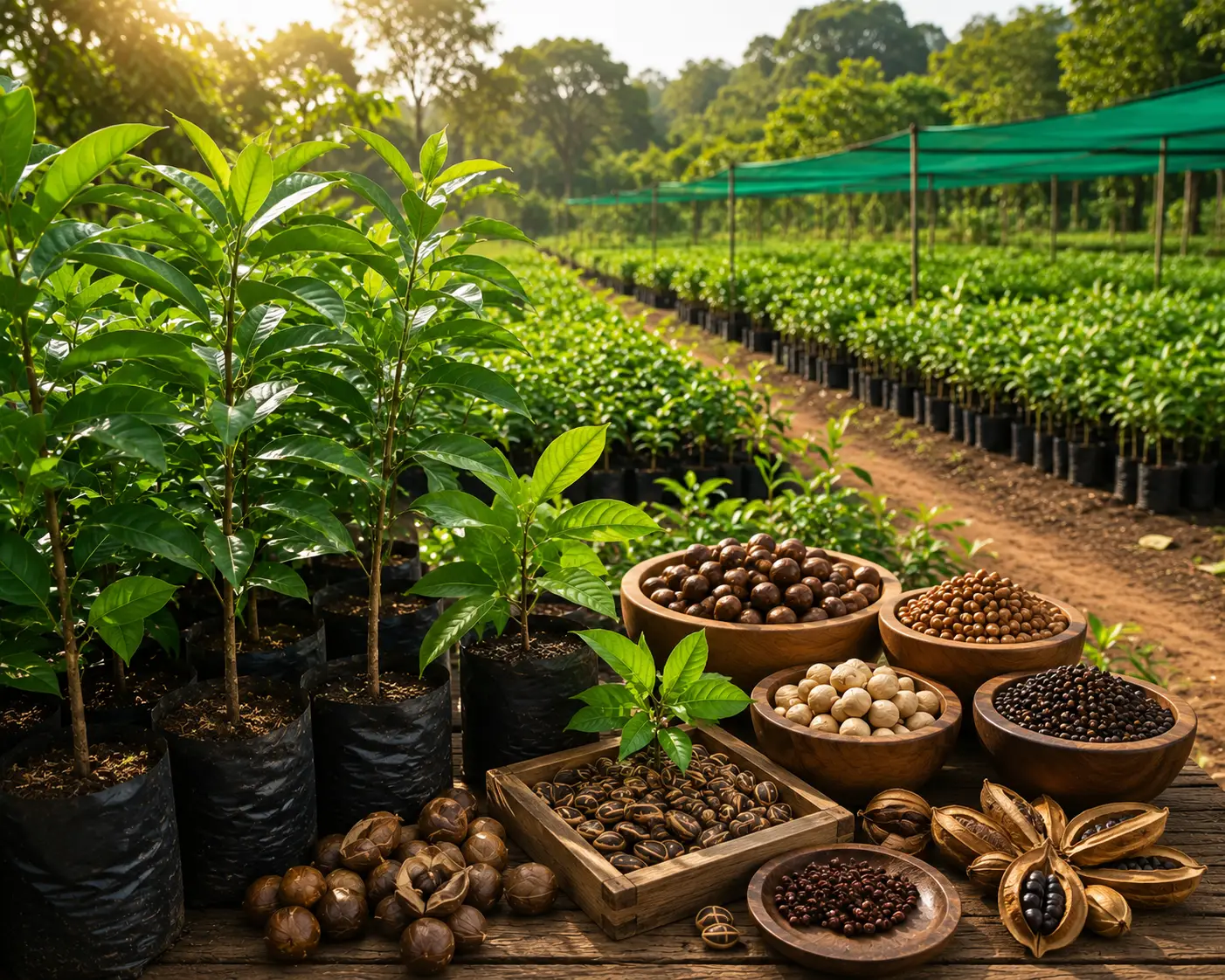
We’ve built our own work around two specific lanes: forest plants and forest seeds for large-scale plantation, afforestation, and reforestation projects, and native tree seeds and saplings for anyone who wants species that genuinely belong in Maharashtra’s soil and climate — not something that merely survives here.
That second point matters more than people realize. Native plants Maharashtra buyers ask us about aren’t just a regional preference; they’re a practical one. A native species has already spent generations adapting to this exact rainfall pattern, this exact soil type, these exact local pests. An unfamiliar or imported variety is starting that adjustment from zero, often with a much lower survival rate to show for it.
Buying plants online changes the questions you should be asking
An online plant nursery makes ordering easier, but it also removes the one thing people used to rely on — walking through rows of stock and picking plants by eye. When you’re buying live plants online, especially in bulk for a plantation project, you can’t inspect each one individually, so the questions shift. It’s less about “does this particular plant look healthy” and more about “does this supplier consistently ship healthy stock, and do they actually know how to pack and transport live plants without damaging root systems along the way.”
That’s a genuinely different skill than running a physical shop, and it’s one we’ve had to build deliberately — because a tree sapling supplier shipping saplings for a government or CSR project doesn’t get a second chance if a batch arrives stressed or damaged. The order has already been counted, the budget already allocated, the planting date already fixed.
Where gardening plants and forest plants actually overlap
Not everything we grow is destined for a hillside restoration project. A good amount of our stock supports ordinary gardening — home gardens, courtyards, small landscaping projects — and there’s more overlap with our forestry work than people expect. The same attention to root health, soil compatibility, and honest information about a plant’s actual needs applies whether someone’s planting a single tree in a backyard or ten thousand saplings across a reforestation site.
We also grow a fair amount of medicinal plants at the nursery — Neem, Tulsi, Ashwagandha, and other species that have been part of household and community use in this region for generations. A medicinal plants nursery isn’t a separate business from a forest plant nursery, really; a lot of these species are native trees and shrubs too, and they show up naturally once you’re focused on regional biodiversity rather than just ornamental variety.
Why tree plantation projects live or die at the seed and sapling stage
If you’re involved in any kind of tree plantation work — corporate CSR, NGO-led reforestation, or a government afforestation scheme — the plants and seeds you start with quietly decide most of the outcome before a single hole gets dug. Afforestation plants and reforestation plants need to be matched to the specific site: soil type, elevation, existing tree cover, rainfall. A forestry nursery that treats every order the same way, regardless of destination, is setting projects up to underperform no matter how well the actual planting day goes.
This is really the whole philosophy behind how we run things at Agatya Greens Nursery. We’re not trying to be the biggest online plant nursery or stock every ornamental variety under the sun. We’re trying to be a dependable source for people who need forest plants, forest seeds, native tree seeds, and tree saplings that are grown, stored, and shipped the right way — because for most of our clients, the real measure of success isn’t the plantation day. It’s whether those same trees are still standing, and still native to the land they were planted in, years later.